
There is so much history in this area. For a bit of background, the Ypres Salient was a contested bulge in the Allied front lines during WWI, surrounded on three sides by German forces who had the good fortune to be on higher ground. Ypres was the gateway to ports such as Dunkirk and Calais; it had to be held even though Allied troops were constantly hammered with artillery fire, gas attacks and trench warfare. The Allied troops were a combination of the British Empire (British, Canadian, Australian, Indian and South African) as well as French and Belgian troops. There were 3 major defining battles at this location during WWI. The First Battle of Ypres (Oct-Nov 1914) stabilizing the Western Front; Second Battle of Ypres (22 April – 25 May 1915) first large-scale use of chlorine gas by Germany and also where Canadian John McCrae wrote “In Flanders Fields”; Third Battle of Ypres (31 July – 10 Nov 1917) called Passchendaele.
Full disclosure – I have done a lot of reading on WWI and WWI but I am not an expert by any means. I am writing the facts in a “nutshell” so to speak. I could write for days on these topics but I will just touch on some facts and leave links if you want to read more on your own.
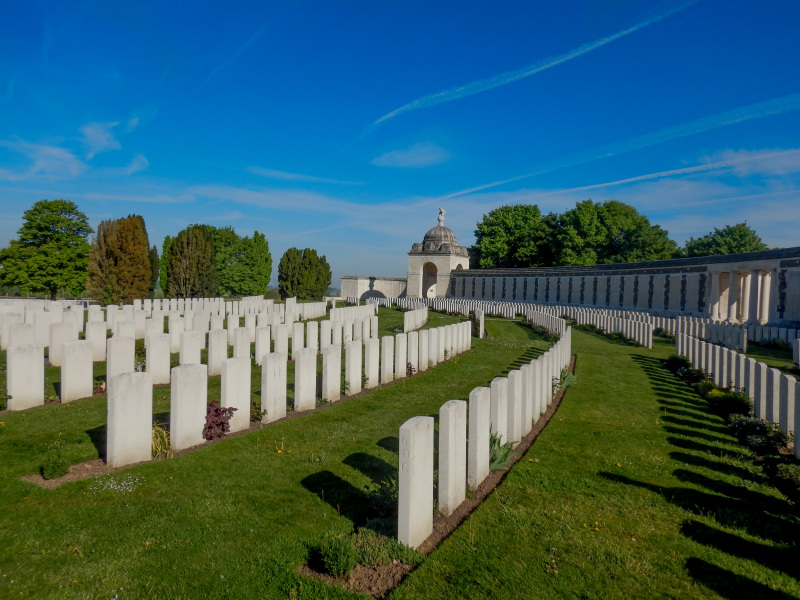
We stopped at the Tyne Cot Memorial commemorating nearly 35,000 servicemen from the United Kingdom and New Zealand who died in the Ypres Salient in 1917. Above photo is one of the photos I took.
Tyne Cot Cemetery, was originally a nurse’s station but after the battles, it just got bigger and is now the largest Commonwealth Cemetery in the world.
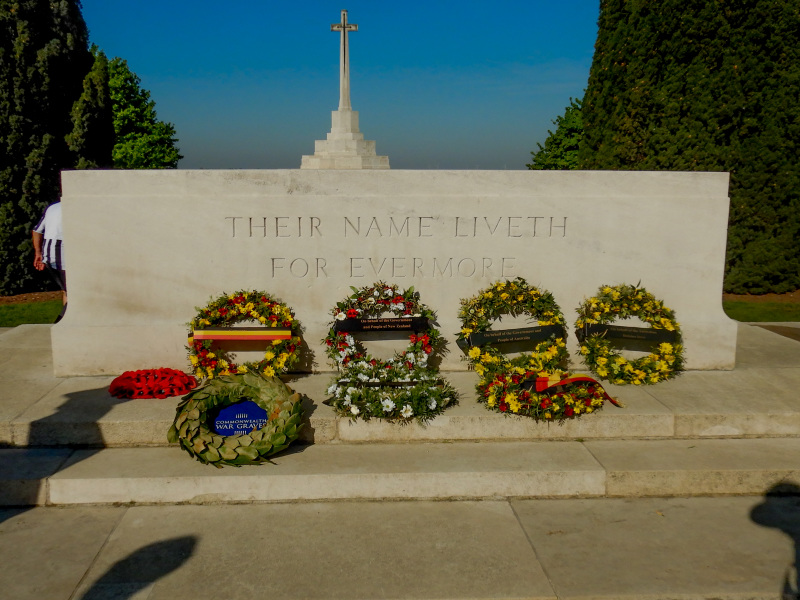
Europe does a wonderful job of creating and maintaining memorials 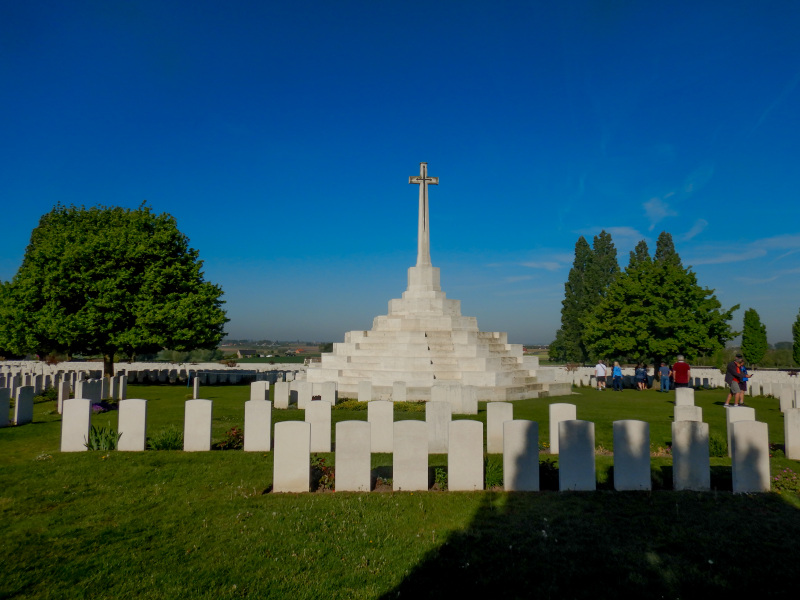
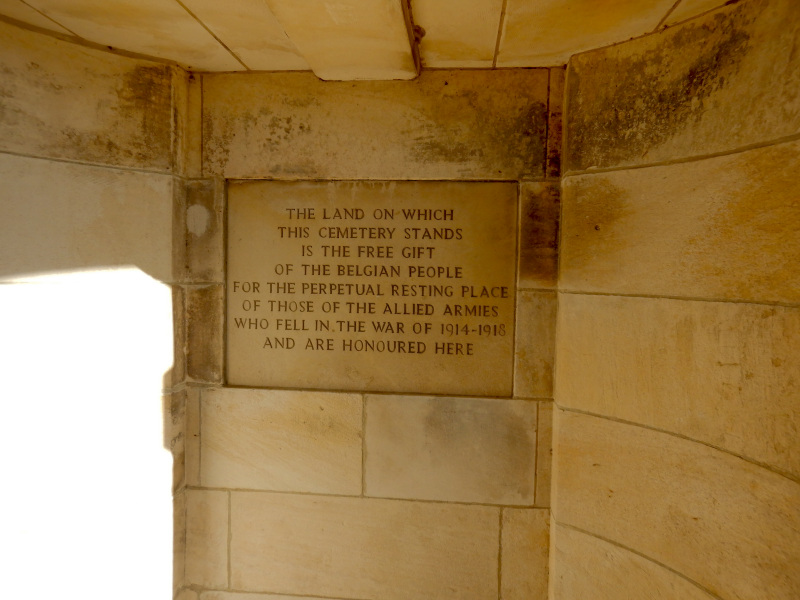
Land donated by the Belgian people 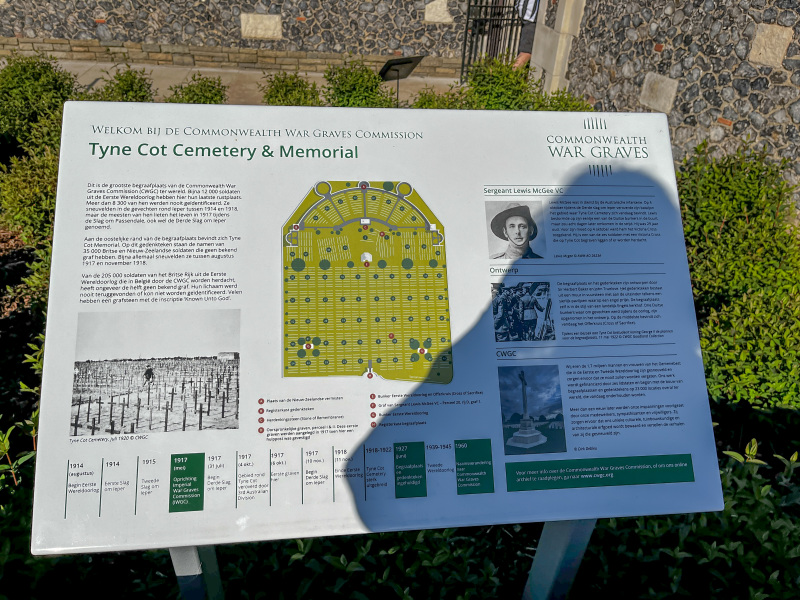
We also stopped at the Passchendale museum. This was such a sad spot, I can’t even fathom how 600,000 soldiers died here. The British tried to move the frontline and at one point were supported by ANZAC which stand for Australian New Zealand Army Corps. There was so much rain, saturating the ground and no drainage, so that the area was a massive sea of mud which ended up drowning men and animals. ANZAC had 2,700 losses; 846 soldiers fell in less than 4 hours. This was the 3rd battle of the Ypres Salient.
At the museum, there was an exhibit of sculpted arms reaching up to the sky called “Falls the Shadow”, a sculpture by New Zealand artist Helen Pollock featuring clay arms reaching up from a “sea of mud”. She wanted to symbolize soldiers who died in the 1917 battle, symbolizing both the futility of war and begging for a better world. She did this for the 846 New Zealanders who, in a single morning, died in the battle. She used clay from New Zealand and clay from the Zonnebeke battlefield. Photo below
After this battle, Canadian troops were ordered in, they took the village of Passchendaele but could not advance further, 16,000 Canadians were dead, missing or wounded.
After 100 days of fighting, the front line moved only 8 kilometres and as I mentioned 600,000 men died.
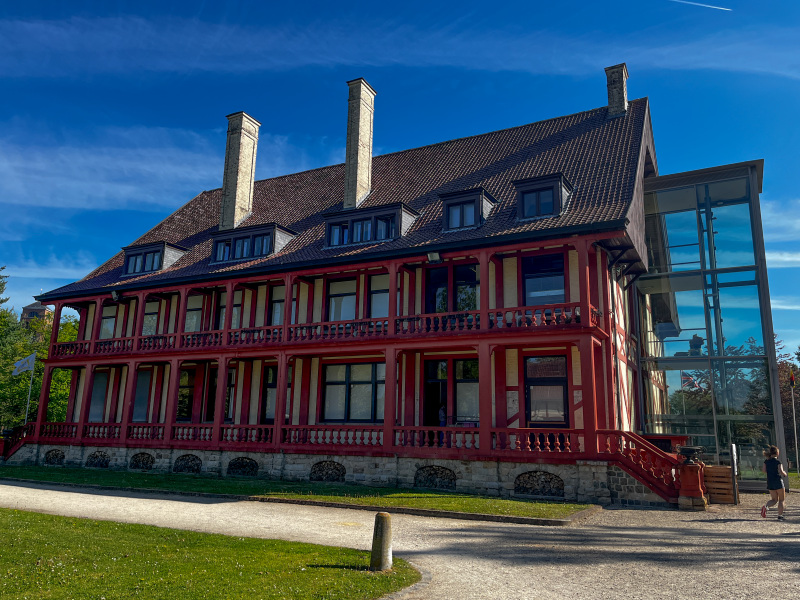
Passchendaele Museum 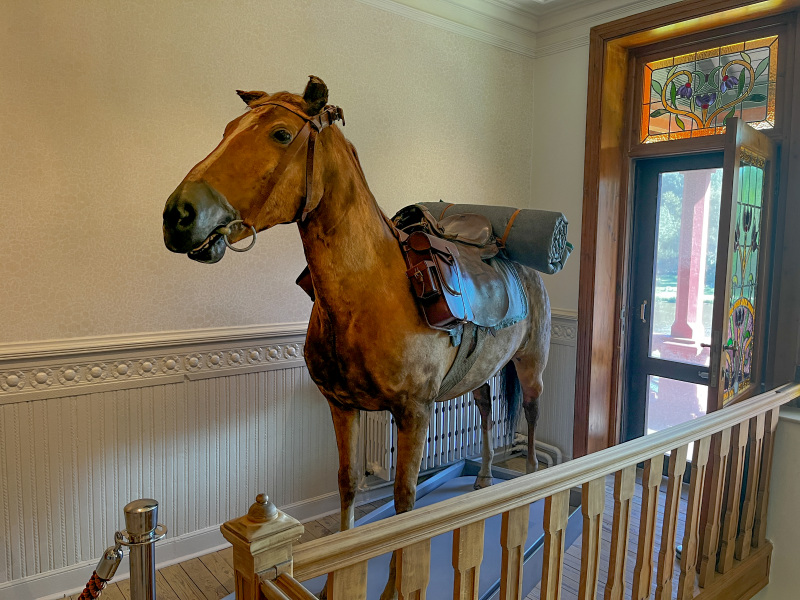
Exhibit 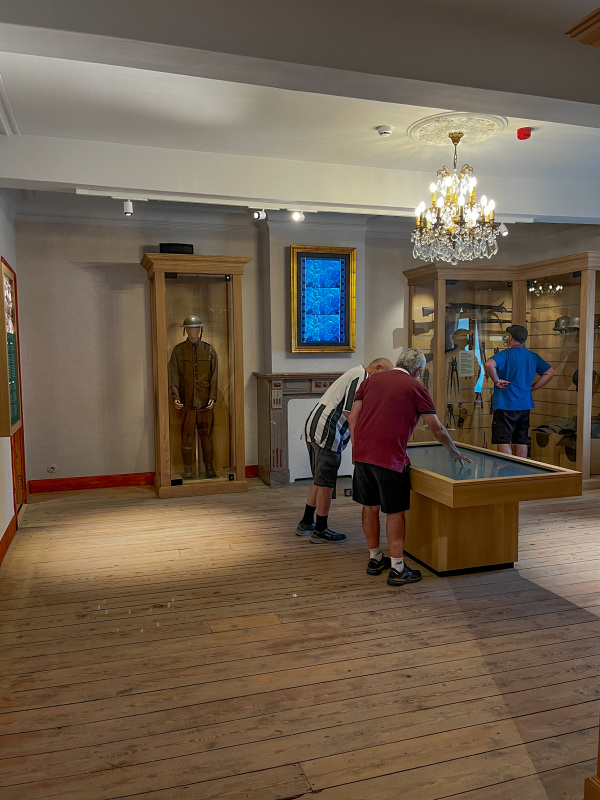
So much information 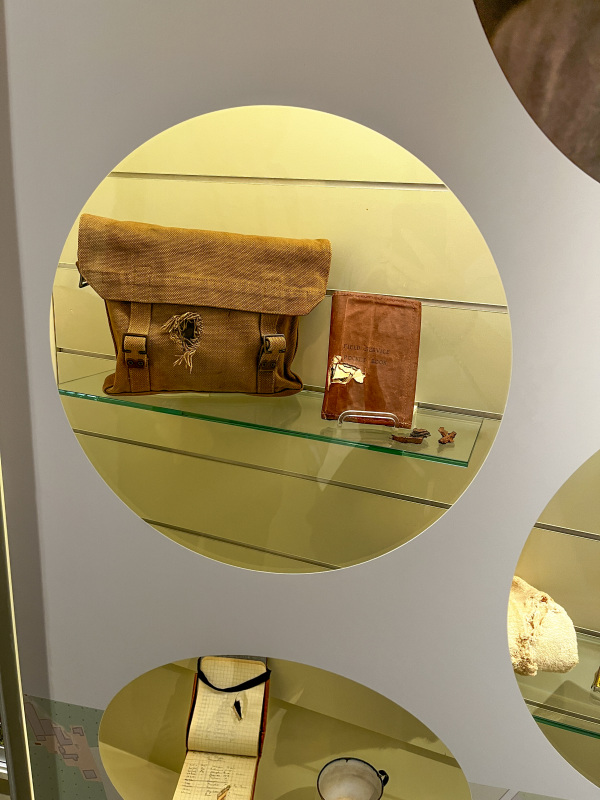
You can see the bullet holes in the items 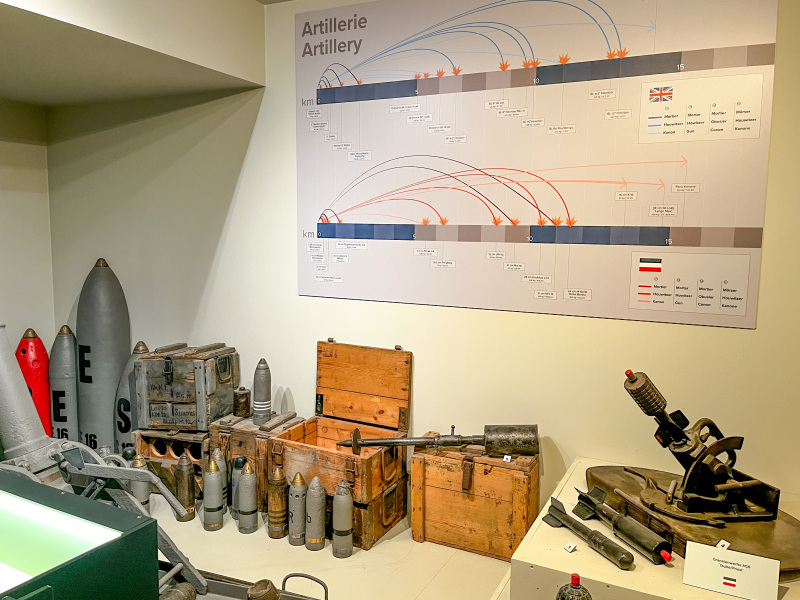
Artillery Distances 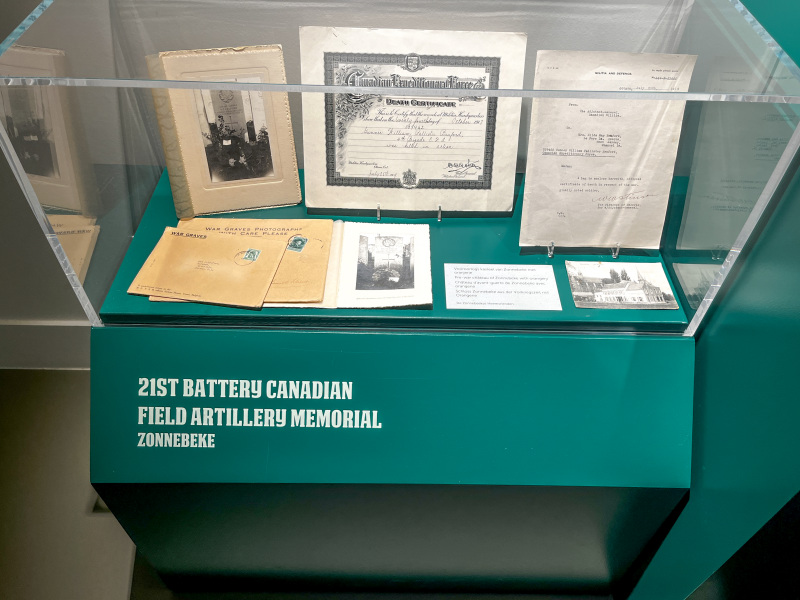
Zonnebeke 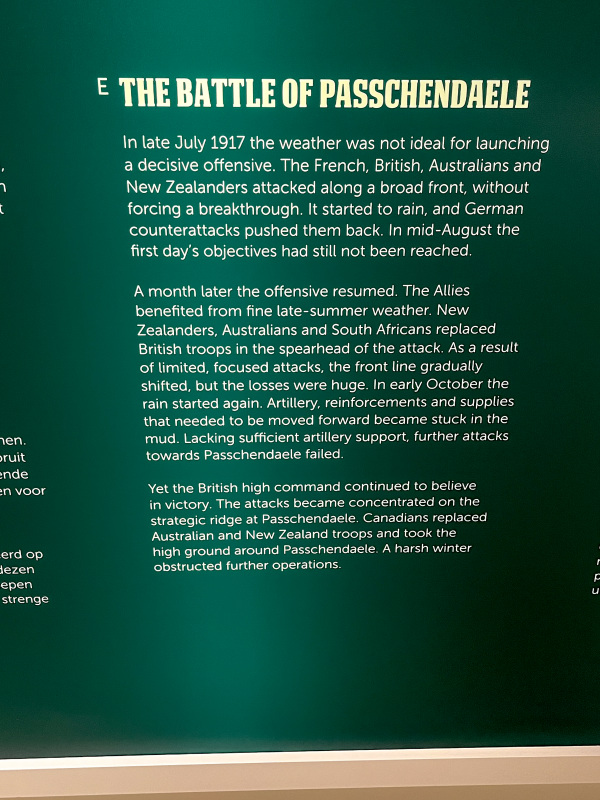
Battle of Passchendaele 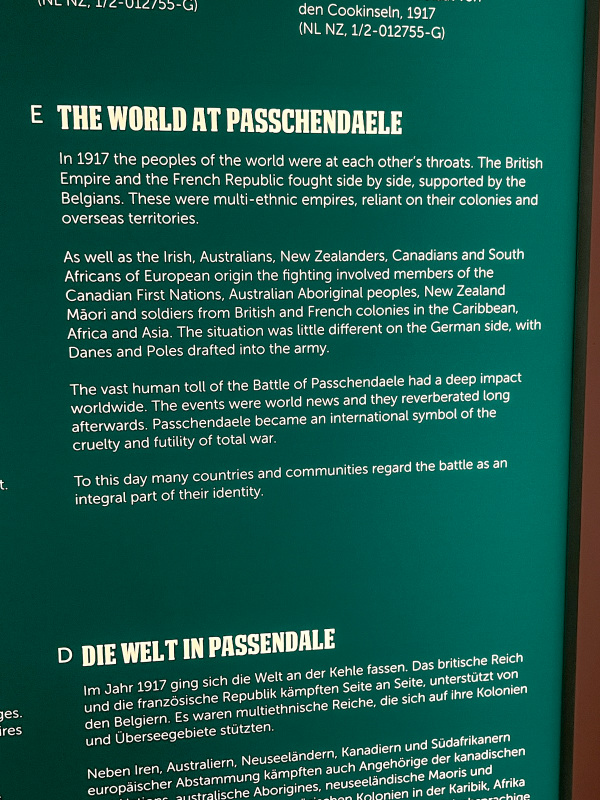
The World at Passchendaele 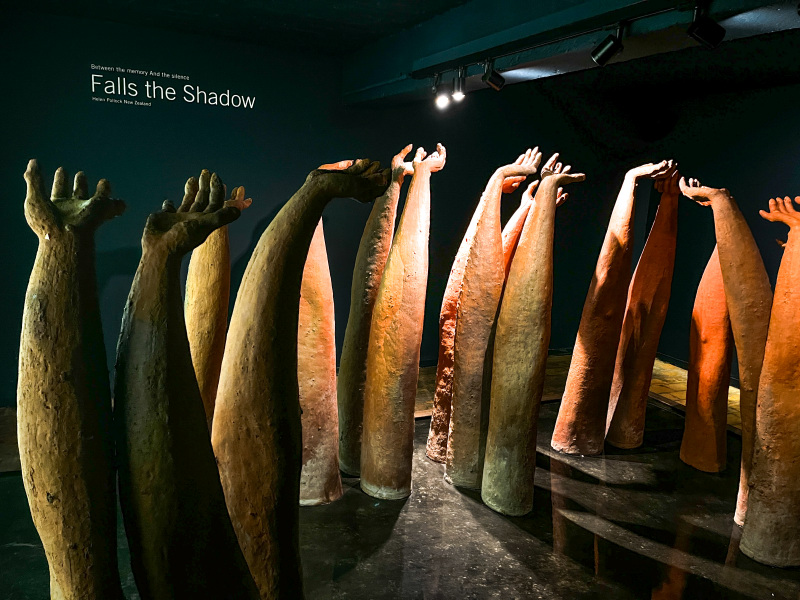
“Falls the Shadows” by Helen Pollock 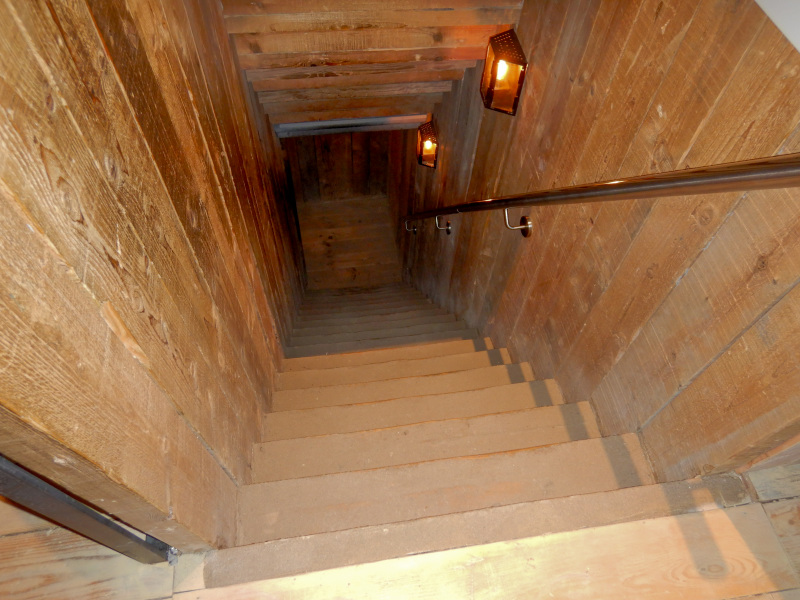
Heading to the trenches 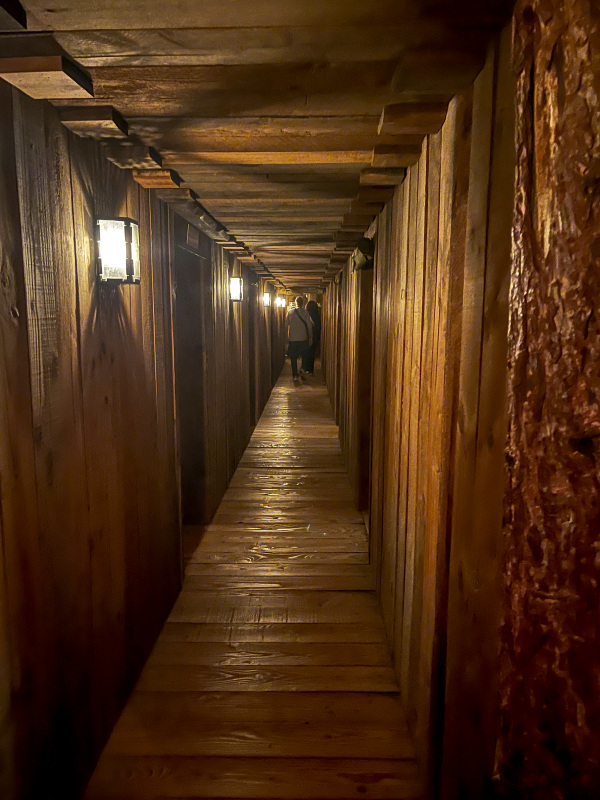
Hallway 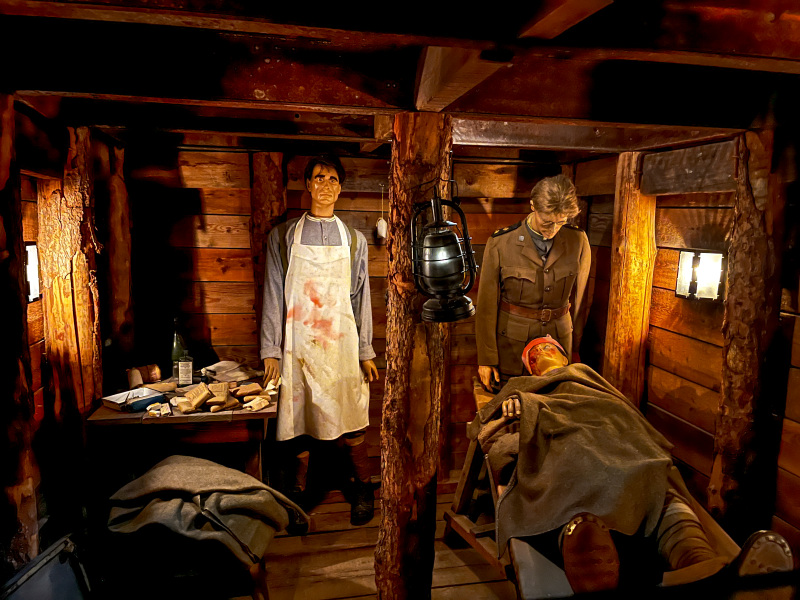
Makeshift hospital 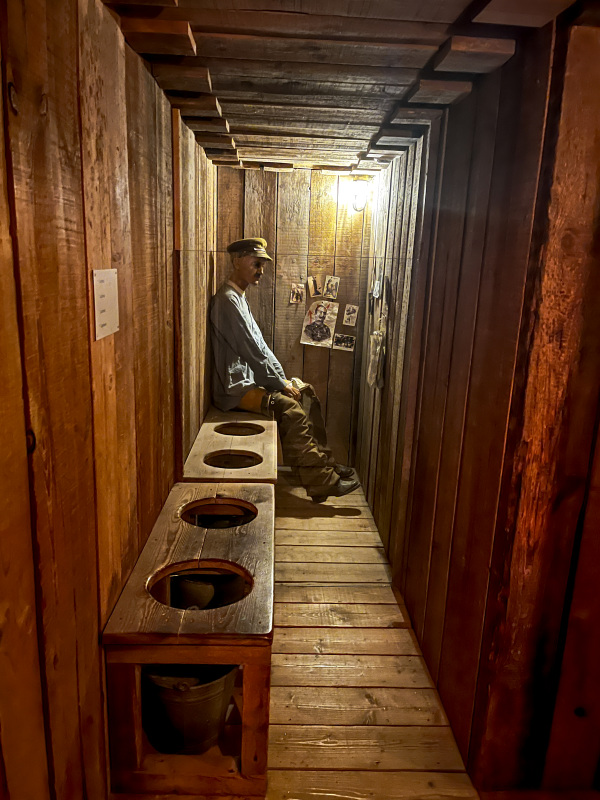
Self explanatory 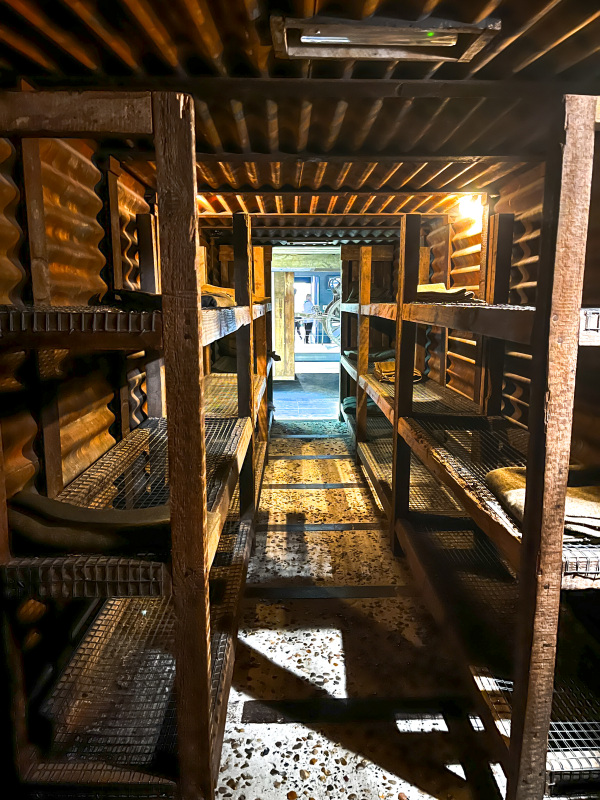
Bunks 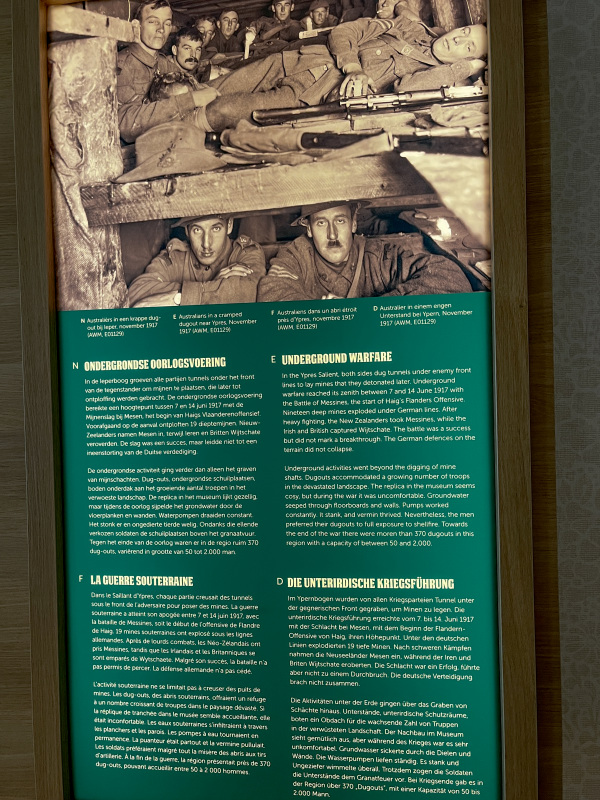
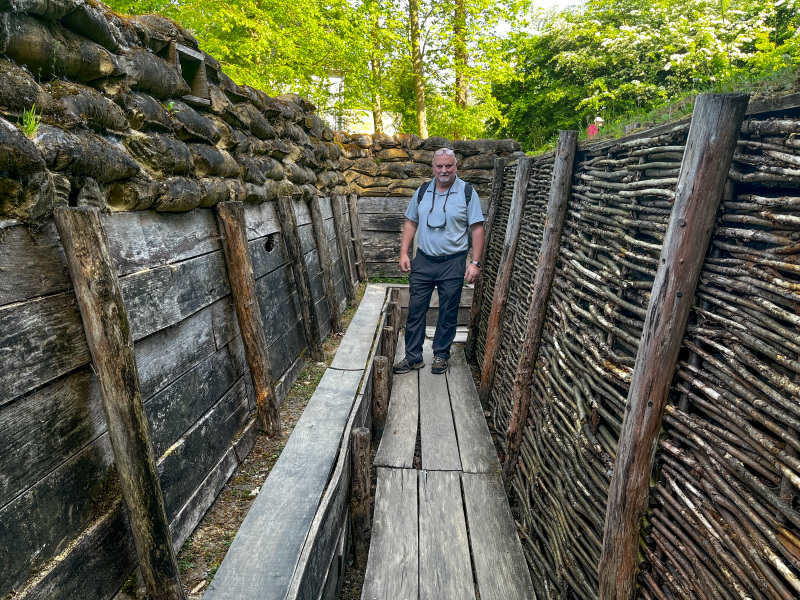
Clint in the trench 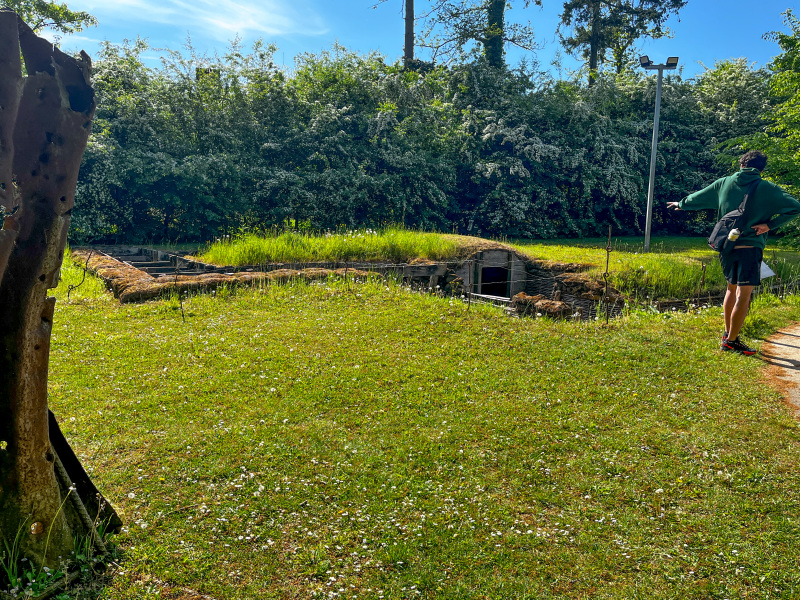
They have these so you can walk through them 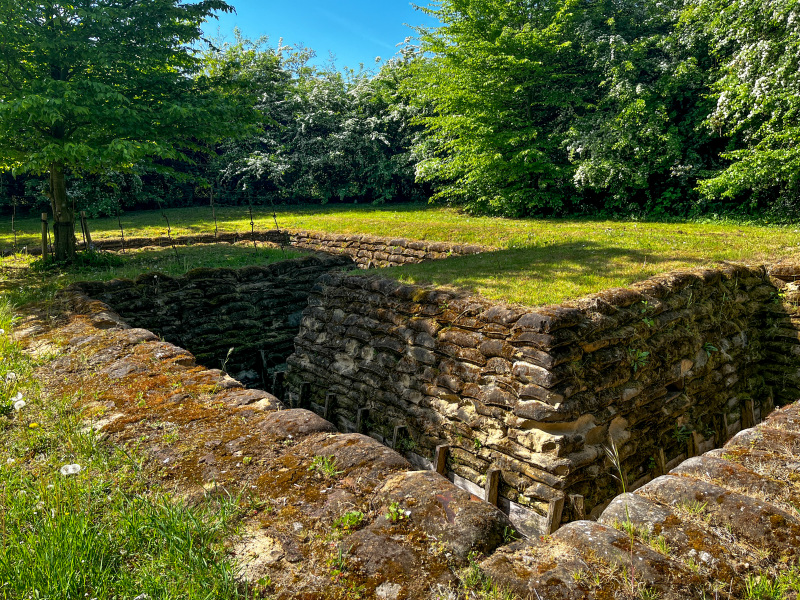
It was surreal standing in these trenches
Some of these locations are almost too much to think about, if that makes sense. They are heart wrenching and I hope we never see wars like this again.
Next post, I’ll write about Essex Farm Cemetery and the Menin Gate.


I wish so much that humans would stop the insanity of wars. There are no winners.
LikeLiked by 1 person
☹️
LikeLiked by 1 person
They have preserved everything wonderfully and with all the exhibits and information posted, it really helps you get an understanding of what they went through and the conditions at that time.
LikeLiked by 1 person